Nature of Business
Revenue structure
Golden Lime Public Company Limited and Subsidiaries’ diagram of revenue structures by product line or business group; (GRI: 417-1)
|
Main Business and Revenue Structure
Golden Lime Public Company Limited_GL Subsidiaries are
Thai Marble Corporation Ltd. _TMC /(1) Golden Lime Engineering Co., Ltd._GLE /(2) |
The Company and Subsidiaries manufacture and supply products as per details below |
||
|
GL |
TMC |
GLE |
|
|
1) Lime Product 1.1 Calcium Oxide (Quick Lime) 1.2 Calcium Magnesium Oxide (Dolime) 1.3 Calcium Hydroxide (Hydrated Lime) |
(1.1)-(1.3) |
||
|
2) Calcium Carbonate 2.1 Calcium Carbonate Uncoated 2.2 Calcium Carbonate Coated 2.3 Calcium Carbonate Powder |
(2.1)-(2.2) |
(2.3) |
|
|
3) Marble Product and Marble Installation 3.1 Mable from Domestic marble quarry 3.2 Marble Handicrafts 3.3 Marble Project Installation |
(3.1) – (3.3) |
||
|
4) Trading and Other Product & Services 4.1 Trading Other Product Group 4.2 Chemical product and Fuel Coal 4.3 Limestone and Aggregate |
(4.1)/(4.2)/(4.3) |
(4.3) |
|
|
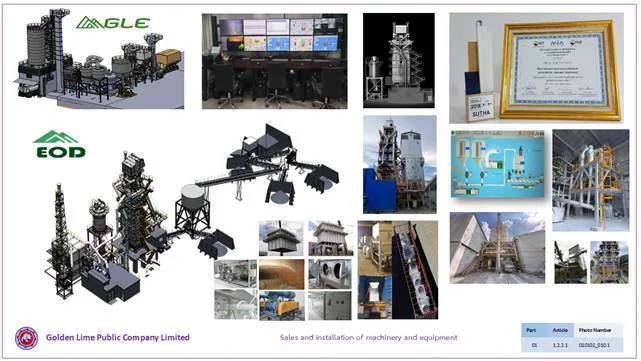
5) Machine and Installation and Engineering Services 5.1 Engineering Project 5.2 Machine and Equipment Trading 5.3 Engineering Design and Consulting |
(5.1)-(5.3) |
||


Revenue structure
Revenue of the product lines or the businesses of the Company and its subsidiaries for the period ending December 31st are detailed as follows: (GRI: 201-1)
|
Revenue Structure of the Group from the consolidated financial statement Y2023 - Y2025 |
||||||||||||||||||
|
Revenue Structure of the Group (Unit: Thousand Baht) |
SUTHA |
Subsidiaries |
Total Revenues |
Percentage From the total revenues |
||||||||||||||
|
TMC |
GLE |
|||||||||||||||||
|
Percentage of shareholding |
99.8 |
100 |
||||||||||||||||
|
Yearly Revenue of the Company |
2023 |
2024 |
2025 |
2023 |
2024 |
2025 |
2023 |
2024 |
2025 |
2023 |
2024 |
2025 |
2023 |
2024 |
2025 |
|||
|
Revenues from sales and services (GRI:201-1) / 5 |
1,181,792.33 |
1,094,661.46 |
1,064,055.30 |
245,610.15 |
256,584.36 |
233,214.71 |
1,040.45 |
3,469.02 |
1,077.64 |
1,428,442.92 |
1,354,714.84 |
1,298,347.65 |
98.88% |
99.5% |
98.23% |
|||
|
1. Lime Product (Calcium Oxide, Calcium Magnesium Oxide, Calcium Hydroxide) |
1,136,886.67 |
1,051,599.15 |
1,025,390.83 |
44,530.65 |
50,212.09 |
43,390.80 |
0.00 |
0.00 |
1,181,417.32 |
1,101,811.24 |
1,068,781.63 |
81.78% |
80.80% |
80.86% |
||||
|
2. Calcium Carbonate |
22,134.43 |
13,362.96 |
5,341.37 |
71,284.75 |
79,072.70 |
80,215.45 |
0.00 |
0.00 |
93,419.18 |
92,435.66 |
85,556.82 |
6.47% |
6.78% |
6.47% |
||||
|
3. Marble |
0.00 |
0.00 |
123,639.76 |
121,817.17 |
102,551.13 |
0.00 |
0.00 |
123,639.76 |
121,817.17 |
102,551.13 |
8.56% |
8.93% |
7.76% |
|||||
|
4. Trading and Services |
22,771.23 |
29,699.34 |
33,323.10 |
6,154.99 |
5,482.40 |
7,057.33 |
0.00 |
0.00 |
28,926.21 |
35,181.75 |
40,380.43 |
2.00% |
2.58% |
3.05% |
||||
|
5. Machinery and Engineering |
0.00 |
0.00 |
0.00 |
0.00 |
1,040.45 |
3,469.02 |
1,077.64 |
1,040.45 |
3,469.02 |
1,077.64 |
0.07% |
0.25% |
0.08% |
|||||
|
Other revenue in PL |
11,947.04 |
4,113.54 |
6,750.82 |
4,336.12 |
4,704.25 |
17,375.20 |
-44.48 |
53.87 |
11.05 |
16,238.68 |
8,871.67 |
23,435.64 |
1.12% |
0.65% |
1.77% |
|||
|
Gain from Currency Exchange |
668.07 |
351.15 |
-701.43 |
139.02 |
123.31 |
-86.64 |
-99.39 |
45.15 |
45.15 |
707.69 |
519.61 |
-784.02 |
0.05% |
0.04% |
-0.06% |
|||
|
Other Revenue /1 |
11,278.97 |
3,762.39 |
6,750.82 |
4,197.10 |
4,580.94 |
17,461.84 |
54.91 |
8.73 |
7.00 |
15,530.99 |
8,352.06 |
24,219.66 |
1.08% |
0.61% |
1.83% |
|||
|
Total Revenue for the Year |
1,193,739.37 |
1,098,775.00 |
1,070,104.69 |
249,946.27 |
261,288.62 |
250,589,91 |
995.97 |
3,522.89 |
1,088.69 |
1,444,681.60 |
1,363,586.51 |
1,321,783.29 |
100% |
100% |
100% |
|||
|
Domestic and Foreign Revenues (GRI: 201-1) Unit: Thousand Baht |
Y2023 |
Y2024 |
Y2025 |
|||
|
Total Sales Revenue |
1,444,681.60 |
1,363,586.51 |
1,321,788.29 |
|||
|
Domestic sales revenue |
1,345,279.11 |
1,282,531.76 |
1,245,050.24 |
|||
|
% Domestic sales revenue |
93% |
94% |
94% |
|||
|
Export sales revenue |
83,163.81 |
72,183.08 |
54,375.05 |
|||
|
% Export sales revenue |
6% |
5% |
4% |
|||
|
|
|
|
|
|||
|
Export Sales ranked by the countries |
83,163.81 |
100% |
72,183.08 |
100% |
54,375.05 |
100% |
|
- Indonesia |
965.45 |
1% |
19,308.67 |
27% |
0.00 |
0% |
|
- Laos |
27,981.10 |
34% |
17,775.36 |
25% |
1,821.01 |
3% |
|
- Bangladesh |
12,250.44 |
15% |
3,690.84 |
5% |
17,179.08 |
32% |
|
- Taiwan |
5,485.47 |
7% |
6,443.41 |
9% |
15,721.28 |
29% |
|
- Cambodia |
3,879.40 |
5% |
3,981.42 |
6% |
1,189.55 |
2% |
|
- Philippine |
628.85 |
1% |
1,271.55 |
2% |
2,965.74 |
6% |
|
- New Zealand |
2,669.09 |
3% |
0.00 |
0% |
0.00 |
0% |
|
- Hong Kong |
725.64 |
1% |
1,597.13 |
2% |
2,352.95 |
4% |
|
- Singapore |
1,118.26 |
1% |
3,925.13 |
5% |
9,243.90 |
17% |
|
- Myanmar |
670.56 |
1% |
342.00 |
0% |
0.00 |
0% |
|
- Vietnam |
0.00 |
0% |
80.19 |
0% |
0.00 |
0% |
|
- Australia |
26,554.54 |
32% |
914.36 |
1% |
650.48 |
1% |
|
- Korea |
40.54 |
0% |
5,744.22 |
8% |
3,251.06 |
6% |
|
- Other |
194.49 |
0% |
7,108.80 |
10% |
0.0 |
0% |
|
% Compared to export sales revenue |
||||||
|
|
|
|
||||
Other income as specified in the financial statements
|
|
Y2023 |
Y2024 |
Y2025 |
|
Total other income (thousand baht) |
16,238.68 |
8,871.67 |
24,219.66 |
|
Other income from operations (thousand baht) |
16,238.68 |
8,871.67 |
24,219.66 |
|
Other income not from operations (thousand baht) |
707.69 |
519.61 |
-784.02 |
|
Gain from Currency Exchange (thousand baht) |
15,530.99 |
8,352.06 |
-784.02 |
Key Raw Materials for Production
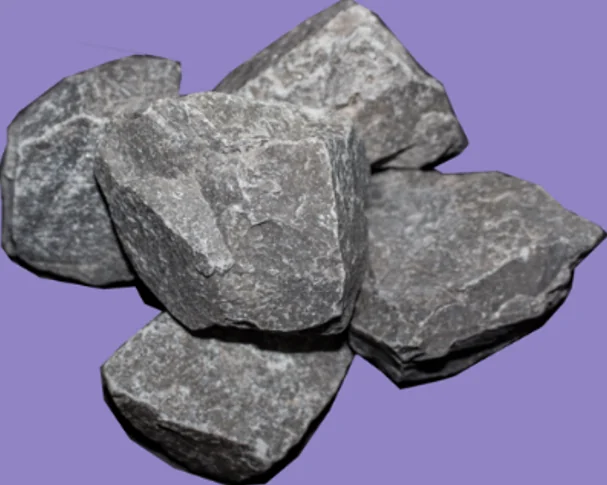
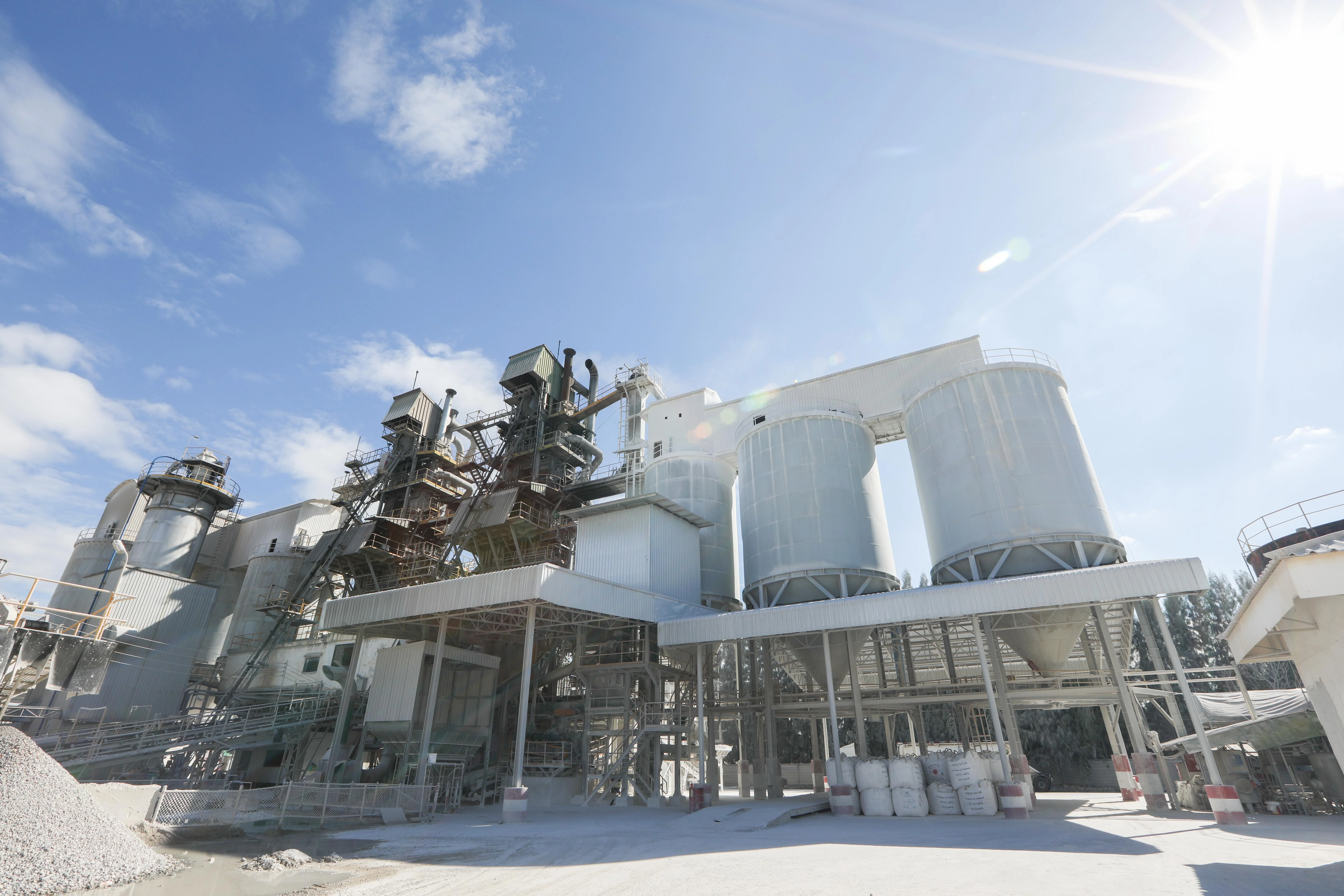
The main raw materials for lime production and Dolime product are limestone or dolomite and fuel. The major raw material for coated and uncoated calcium carbonate production is calcite, and the main raw material for producing calcium powder is marble chips. At present, the Company sources limestone from Saraburi Province and Lopburi Province sources with quality that meets the Company's requirements. The Company purchases limestone, dolomite and calcite from up to 4-5 suppliers. A team of geologists, along with control and quality assurance team are dispatched to explore limestone quality and collect samples from both current and new sources of purchases.




Limestone
Limestone serves as the primary raw material for the manufacture of calcium oxide and calcium hydroxide. This sedimentary rock is predominantly composed of calcium carbonate (CaCO3), typically in the form of the mineral calcite, along with other components such as magnesium oxide (MgO) and silica (SiO2).
The Company has entered into a long-term TMC-GL Kiln Feed Limestone Supply Agreement, which includes the establishment of a quarry management team to oversee operations at the Khao Khao quarry, as per concession number 32517/16065. This agreement enables the Company to obtain high-quality limestone with a significant calcium carbonate content from the quarry. Approximately 80% of the Company's kiln feed stone is sourced from TMC, with the remainder supplied by local vendors in Saraburi and adjacent provinces.
The limestone acquired from TMC's quarry is of superior quality, characterized by a high calcium carbonate content, making it ideal for lime production. The long-term Kiln Feed Limestone Supply Agreement with TMC is exclusive, granting TMC the sole right to supply this limestone with the Company.
In 2023, SUTHA achieved its objective of securing production supply by successfully renewing the concession for the Khao Khao quarry, which is operated by Thai Marble in Saraburi Province. This subsidiary is responsible for supplying kiln feed stone necessary for producing the required quality of quicklime. SUTHA acquired Thai Marble Co., Ltd. through the purchase of common shares from the original shareholders in 2020 and successfully renewed the concession certificate, which was set to expire in October 2023, for an additional 20 years. This renewal ensures SUTHA's ability to address growth challenges and maintain security and stability for its business and stakeholders.
Dolomite (Dolomite / Dolomitic Limestone)
Dolomite is the main raw material for the production of Calcium Magnesium Oxide or Dolime. Dolomite is one of the Limestones mostly consists of Calcium Magnesium Carbonate (CaMg(CO3)2) and other substances such as Silica (SiO2). Dolomite has the same origin as Calcite found in Dolomitic Limestone by the secondary deformation by replacing the existing Lime by Magnesium or occurs in the Lead or Zinc which cut through Limestone. Dolomite has a dense texture visible in white, grey, pink, green, brown or black and well dissolve in water. In Thailand, Dolomite is prevalent in Karnchanaburi, Suratthani, Krabi and Song-Khla etc.
Calcite
Calcite is the most stable carbonate mineral in the mineral group with chemical formula, i.e. calcium carbonate (CaCO3). This is the crystalline rock with non-toxic properties, normally white or colorless, shiny like transparent to translucent glass, highly bright and can disperse well. In Thailand, calcite is common in limestone provinces and prevalent in Lopburi Province, Saraburi Province, Chanthaburi Province, Kanchanaburi Province, Chumphon Province, Surat Thani Province, Nakhon Sawan Province and Phetchaburi Province.
The Company uses calcite that has already been crushed into flakes as raw material to produce both uncoated calcium carbonate (Uncoated Calcium Carbonate) and coated calcium carbonate (Coated Calcium Carbonate), which is suitable for use as a filler (Filler) in the rubber and plastics industries, or as a whitening agent for the paint industry. The Company purchases calcite from approximately 3-5 domestic suppliers, selected based on the quality of the calcite, its whiteness, price, and the supplier's service. The Company is responsible for the cost of goods and transportation, with the supplier delivering to the Company's factory. In addition, the Company regularly dispatches a geology and quality assurance team to randomly inspect the quality of calcite at the quarry, to ensure the quality of the calcite purchased.
Marble Scrap for Calcium Carbonate Powder of TMC (subsidiary)
TMC converts the marble scrap excess from the production of the marble-finished goods into calcium carbonate powder (CaCO3) to maximize the use of raw material. The raw material for the production of Ground calcium carbonate is derived from the by-product of the marble blocks production process, which is known as a source of fine raw materials and high quantity of natural calcium carbonate and can be used as primary raw material of other industries as well.
Fuel – Coal
The Company's Fuel Procurement and Risk Management
- Key Procurement Strategies:
- Identifying dependable suppliers that present low transportation risks and minimal losses during transit.
- For international imports, evaluating the dependability of suppliers, transportation providers, and insurance firms.
- Ensuring that fuel selection adheres to the necessary specifications, thermal characteristics, quantity, and pricing that are appropriate for processing and storage.
Materials for Marble Slabs Production and Handicraft
The production of marble slabs involves the utilization of marble rods sourced from TMC mining operations or imported from various countries. These rods undergo processing to attain standard dimensions or to meet specific customer specifications.
Procurement Policy
Procurement Policy, Product and Service Management, and Sustainable Value Chain Management
Golden Lime Public Company Limited
To ensure that the procurement process is both effective and efficient, characterized by transparent, fair, and auditable operations, the company has implemented a procurement policy. This policy includes guidelines for the management of products and services in alignment with international quality management system standards such as ISO 9001, ISO 14001, and ISO 45001. Additionally, the company is committed to the development of trading partners to facilitate sustainable supply chain management, as outlined below.
1. Procurement will be carried out in accordance with a selection process that adheres to this Code of Conduct to engage partners capable of providing products and services that fulfill requirements efficiently and effectively, with a focus on quality, pricing, and service delivery.
2. The procurement process emphasizes SUTHA business ethics by ensuring the provision of accurate, complete, and transparent information, while treating all business partners equitably and valuing their feedback and suggestions.
3. Procurement activities will be executed with transparency, fairness, and accountability, strictly adhering to applicable regulations and laws as well as guided by risk management protocols, internal controls, and oversight to ensure compliance with corporate governance policies and sustainability development frameworks.
4. The procurement and business partnerships will be conducted with a focus on sustainability, taking into account environmental effects, social obligations, and the tenets of sound governance (Environmental, Social, and Governance: ESG). This entails overseeing business partners to guarantee compliance with the Supplier Code of Conduct (SCOC), which acts as a framework for sustainable supply chain management for effective business partner management, fostering strong relationships, and enhancing collaborative potential for ongoing joint development.
5. Knowledge management will be prioritized between the company and its business partners, as well as relevant stakeholders, to collaboratively advance technology and innovation for improved business management and operations.
Goods and service management Golden Lime Public Company Limited
The company is committed to the sustainable procurement of goods and services, with excellent, transparent and fair operations, adhering to the principles of governance, environmental management and social care in the issues that the Company prioritizes and in line with the sustainability development to support business partners and stakeholders to acknowledge the policy as a guideline for practicing in the same direction in procuring goods and services throughout the supply chain and supporting business partners and stakeholders to acknowledge the policy as a guideline for practicing as follows:
The evaluation of business partners/sellers' performance will be conducted across various categories based on established criteria, as outlined below:
- Products and Raw materials
This includes limestone, aggregates, coal, packaging, and general products, which will be assessed through two primary evaluations:
- Quality: Product characteristics in relation to specifications
- Raw materials evaluated through its documented certificates, physical inspections, and quality standard compliance reports
- Packaging assessed based on documentation and adherence to quality standards
- General products evaluated for their alignment with user requirements
- Service: Timeliness of delivery, ensuring it does not exceed the agreed-upon schedule and that quantities are delivered accurately
- Quality: Product characteristics in relation to specifications
- Service work, include:
- Truck services, evaluated based on quality and service performance.
- Truck rentals for raw material transportation, where quality is determined by the condition of the materials, ensuring they are properly covered and transported in good condition, with accurate weight measurements. Service evaluation will include adherence to delivery timelines, driver performance, and staff coordination.
- Machinery repair services, where quality is assessed based on the operational efficiency of the machinery post-repair.
- Goods Packaging. Quality: Refer to the random weight verification checklist included in the goods transfer report. Service: Evaluate based on the scheduled delivery timeframe.
- Calibration services. Quality: Must be certified in accordance with international standards. Service: the delivery timeline and Post-Delivery Support.
- Contractors and Service Providers
- Safety Consideration
- Environmental Consideration
- Quality Consideration
The business partner acknowledges and adheres to the Supplier Code of Conduct (SCOC), which serves as a framework for sustainable supply chain management, fostering positive relationships, and promoting opportunities for ongoing collaborative development.
Procurement Process
1. Users submit a purchase request form (RO) detailing their product and service needs, which must be approved by the department head or manager, along with any necessary attachments.
2. The procurement department verifies the completeness of the request, including product type, quantity, packaging, and samples for pricing inquiries.
3. A vendor is selected, and pricing is requested based on the provided details.
4. The procurement team evaluates and compares vendor pricing based on product value.
5. A purchase order is submitted for executive approval per the accounting system's authority criteria.
6. In urgent cases affecting quality, users may seek initial approval from the department manager with written justification and notify procurement to expedite the order.
Upon receipt, the user inspects the goods for issues. The procurement department conducts vendor evaluations every six months and reassesses vendors if product quality changes.
Sustainable supply chain management
Golden Lime Public Company Limited
In managing the sustainable value chain, suppliers are important stakeholders who participate and promote the sustainable supply chain. Developing suppliers to jointly manage the sustainable supply chain following the UN Global Compact framework in 6 steps as follows:
- The Supply chain sustainability declaration
- Determine the vision and goals of the Supply chain sustainability
- Establish Supplier Code of Conduct covering social and/or environmental issues to demonstrate the company's commitment to support its partners in their operation and ensuring an ethical and responsible manner to society and environment.
- Conduct risk assessment and identify risks in ESG throughout the supply chain
Study business activities throughout the supply chain to assess and manage partners, for example, key suppliers, strategic suppliers, etc.
- Identify goals, strategies and policies for sustainable supply chain management
Set criteria to classify suppliers for example, trade value, types of traded products/ services, etc.
- Implement strategies, policies, and plans
- Determine roles and responsibilities in the supply chain management within the organization, from the company's directorial level to the related departments, such as purchasing department, production department, quality inspection department, warehouse, and delivery, etc.
- Arrange process/ methods to identify economic risks (e.g., the risk of few partners, noncompliance products/services), social (e.g., human rights, employees, and labor), environment and reduction of impacts and the encouragement of positive biodiversity (such as compliance with laws, regulations, environmental standards, prevention of impacts on the ecosystem, and encroachment on protected areas of biodiversity) caused by the Company's partners.
- Supplier engagement to communicate the Company's expectations and commitments towards sustainability development and corporate in better the competitive abilities and supply chain involvement.
- Performance evaluation and operation monitoring
- Monitor compliance of the supplier's code of conduct such as the supplier's self-assessment or site visit, etc.
- Provide initiatives to include partner's sustainable business operations into the Company's direction
- Communicate strategies and procedures
Communicate and disclose strategies and procedures in working with the partners to develop towards the sustainable supply chain management covering from suppliers' risk assessment, suppliers' management, partner's evaluation, and development activities in both commercially and sustainably.
Production and Capacity
|
SUTHA has 3 production plants as follows: |
|
|
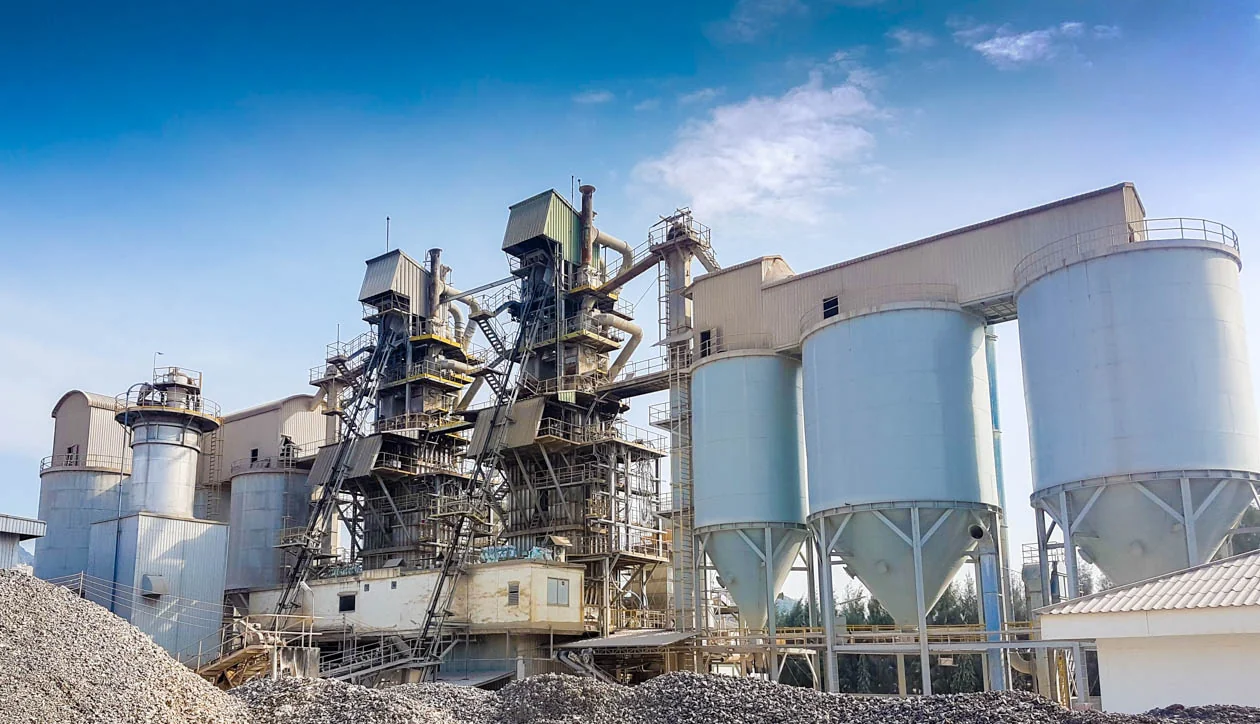
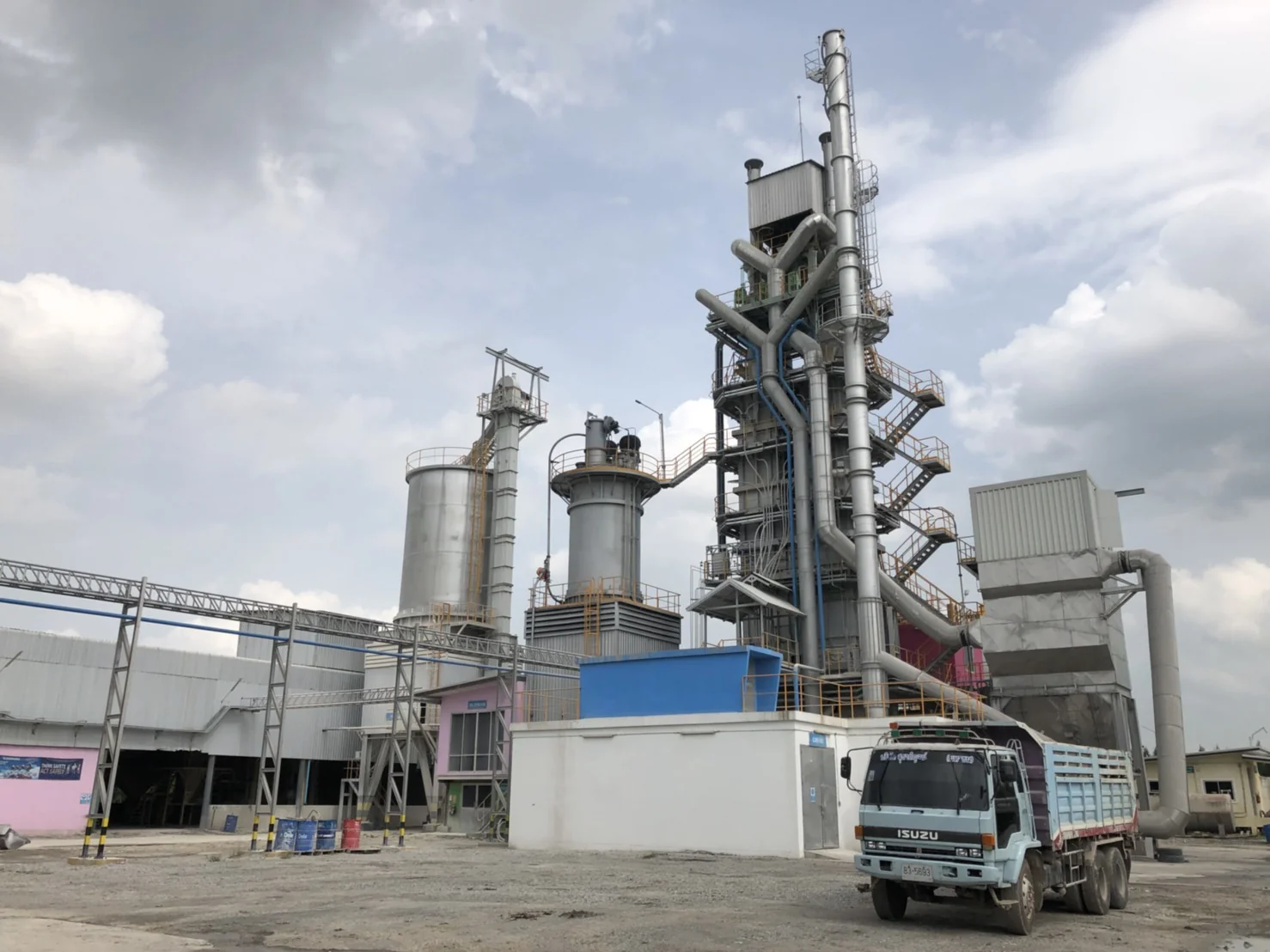
Branch 2: Chong Sarika Sub-district, Phatthana Nikhom District, Lopburi Province [CS Plant] Lime Production Plant (6 kilns: K1-K6) Lime capacity: 328,500 tons/year Milled Lime (ML) capacity: 91,000 tons/year Hydrated Lime (HL) capacity: 157,000 tons/year Calcium carbonate capacity: 26,000 tons/year |
 |
|
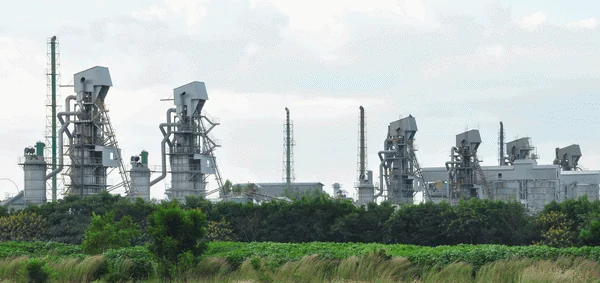
Branch 3: Huai Pa Wai Sub-district, Phra Phutthabat District, Saraburi Province [HW Plant] Lime Production Plant (1 kiln: K7) + (1 kiln planned for the future: K8) Capacity: 55,000 tons/year |
 |
|
Branch 4: Phukrang Sub-district, Phra Phutthabat District, Saraburi Province [PB Plant] Lime Production Plant (2 kilns: K9-K10) Quicklime/ Dolime Total capacity: 110,000 tons/year Milled Lime (ML) capacity: 92,000 tons/year |
 |
|
Note: Referring to the kiln capacity data, based on 365 days per year, with a kiln capacity of 150 TPD, or a production capacity of 150 tons / day / kiln (excluding losses or kiln shutdown hours for maintenance) |
|
The quarry management of Thai Marble Corporation Co., Ltd. (a subsidiary)
The supply of Limestone, which constitutes 80% of the key raw material for lime production, is secured through a long-term Arm's Length Basic agreement with the quarry management of the Khao Khao quarry, as per concession number 32517/1605. This concession was successfully renewed in October 2023 and will remain valid until October 29, 2043. The Company has engaged quarry management to guarantee compliance with performance obligations.
See more details| Limestone quarrying at Khao Khao quarry | Internal controls |
|---|---|
|
Core process; 1. PLANNING, EXPEDITION 2. STRIPPING 3. DRILLING - BLASTING 4. HAULING 4.1 weighing limestone at the quarry before delivering to the mill 5. CRUSHING – SEAVING 6. WEIGHING and transfer limestone to the mills 6.1 weighing KFS_L and KFS_S at the mill front before delivering to GL 6.2 weighing Ready Mix and aggregates for TMC's customers 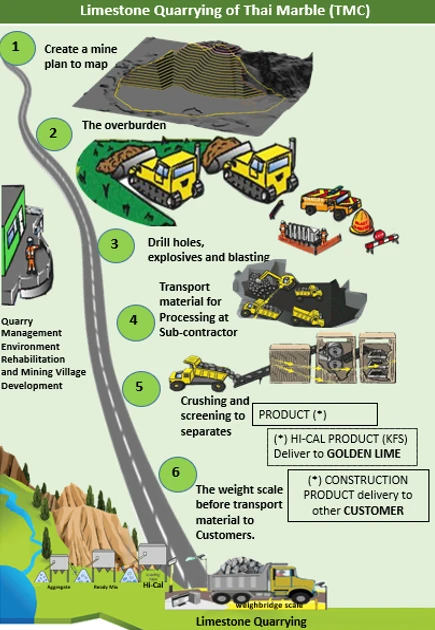
7. Risk management practices conducted to the quarrying contractors to ensure safe and complaint process |
1. The quarrying management is responsible for planning and controlling, supervising, and monitoring the contractors for carrying out the plans and work processes at the quarry. 2. Upon blasting, weighed quarried limestones are transported from the quarry to the mill by internal trucks and an external fleet of contractors which transport limestone to the mill. 3. A contracted mill that receives quarried and weighed limestone. To proceed milling according to the assigned plan; 3.1 High-Calcium Limestone -KFS_L sized 65-115 mm -KFS_S sized 30-35 mm to deliver to the GL plants 3.2 Ready Mix sized 15-25 mm for construction and cement to be distributed to GL customers and to the mills to supply their customers. 3.3 Construction aggregates - ROM Aggregate sized 0-1,000 mm - Stone Chips sized 0-25 mm - Stone Dust sized 0-3 mm and scraps as by products from milling process to be sold to stone mills and to other customers. One controlling point is weighing each product type as stringent control is conducted to each product type, grade, quantity, and storage practices. Internal Controls are implemented to the invoicing and receiving process conducted by TMC Accounting Department and the Stone Mill to oversee and inspect and risk mitigating practices such as CCTV ,Stock counting by the company or independent external auditors on a periodic basis to confirm and calibrate the actual counted quantities with the stock quantities of the stone milling plant, etc. |
Quarrying management is conducted and controlled by Golden Lime Public Company Limited, including subcontractors who pass the suppliers evaluation as for internal control and risk management according to the supply chain management that includes ;
1) ensure compliance with legal and occupational health and safety standards, while adhering to human rights principles, to prevent any negative effects on stakeholders involved.
2) regulating production to guarantee that limestone quantities align with the plan and meet product demand, while also managing production costs for optimal efficiency.
3) Internal controls and risk management involve verifying production volume accuracy, proper sorting and storage of products, overseeing Ready Mix stone inventory, and managing unsold stone inventory to avoid loss or depreciation. The limestone quarry management will collaborate with the accounting department of Thai Marble Co., Ltd. to monitor and confirm the inventory of stones received for production and those sold to customers, as well as checking unsold stock against recorded inventory values.
4) Managing business partners, particularly contractors involved in limestone production at the mine and stone mill, is crucial. Important business partners will be categorized into a Tier 1 group for close monitoring, with scheduled Supplier Site Visits for relevant personnel to assess operations and ensure adherence to internal control processes and risk management for trading partners.
5) Management will establish control and oversight measures to reduce impacts related to legal compliance, financial performance, and operational processes, while also mitigating risks associated with these impacts.
Production Policy
Production Policy: To align with sales strategies and targets, ensuring the high-quality products that meet product standards and customer specifications, all while maintaining cost control and minimizing waste.
Objective : Production output shall meet quality standards and customer requirements while considering environmental, community, societal, safety, and occupational health impacts
Operational Strategies adhering to "Operational Excellence"
- Safe Process, Personal Safety and Environment
Compliance with the Occupational Safety and Health standards; implementing safe working procedures throughout the production process and managing environmental practices within the organization, thereby ensuring the highest performance standards in alignment with the organization's safety protocols.
- Quality Excellence
Emphasizing manufacturing high-quality products. The ongoing marketing efforts address a variety of market demands to maintain a competitive edge sustainably, while exclusively providing the highest quality offerings.
- Energy
Mitigating environmental impact through efficient energy utilization, investing in solar energy, renewable energy, and low-carbon energy initiatives. Additionally, effective management of energy resources is essential to maintain stability and ensure uninterrupted production processes.
- Project Development and Execution
Formulate investment initiatives aimed at enhancing processes, ensuring operational continuity, and generating opportunities for business expansion by effectively managing risks and protecting investments until the projects are systematically completed under stringent oversight.
-
Yield and Supply Chain
Emphasizing the production processes to enhance manufacturing efficiency in order to achieve a competitive edge.
-
Reliability
Prioritizing the maintenance of machinery for enhancing production efficiency to satisfy market demands.
- Cost Effectiveness
Efficiently controlling and managing costs through the utilization of various tools, including Statistical Process Control (SPC) and Lean Manufacturing, aims to enhance the value of products and services while striving for the optimal use of resources.
-
Operation
· Operation to ensure business and operation sustainability by implementing innovative management tools and techniques, which include:
1) Strategy - defining consistent paths and goals
2) Culture - Encouraging employees to work together to create new ideas and implement innovations that enhance work, processes, or products.
3) Process– capable of measuring, replicating, and achieving success.
4) Tool & Techniques - employed to encourage innovation.
5) Matrices –Performance metrics to evaluate effectiveness with measurable capacity.
Preventive measures in quarrying (GRI:403-7)
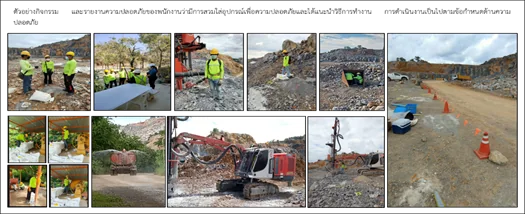
Controls and preventive measures to ensure procedural safety for operators and stakeholders are conducted by mean of the Supplier Site Visit.
-
Set a mutual safe work practices and required standards in arranging safety training by professional safety officers to educate and monitor safety at work control as well as environmental impacts from the subcontractors work process to develop safe work practices leaving no impact to both social and environmental aspects.
-
Locating geologists to survey and identify potential impact to set preventative measures.
-
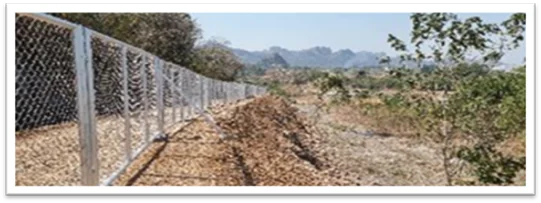
Allocate budget for the rockfall protection barriers at limestone slopes as mitigation measure limiting limestone rolling away from mining areas.

Management and Risk Mitigation in Fuel Procurement:
- Improved Fuel Sources:
- Acquiring fuel with enhanced thermal characteristics to promote efficient combustion in production processes.
- Sourcing from both domestic and international producers, consistently engaging with 2-3 primary domestic suppliers.
- Procuring from additional international suppliers based on their reliability, product quality, quantity, and pricing.
- Price and Risk Assessment:
- Gathering and analyzing price information from a range of suppliers.
- Assessing supplier risks and comparing prices prior to making supplier selections.
- Adhering to a predetermined import schedule for future shipments.
- Inventory Management:
- Preparing for possible delays in international fuel deliveries by maintaining an adequate inventory.
- Managing inventory levels to satisfy company requirements for a duration of 3-8 months, contingent upon working capital management.
- Utilizing low interest working capital while managing risks associated with fixed and floating interest rates.
- Production Process Improvement for Fuel Versatility:
- Advancing production processes to accommodate fuel from both domestic and international sources.
- Executing the FLEX_FUEL initiative to utilize various grades of coal from multiple suppliers.
- Sourcing bituminous or steam coal and processing it to the necessary sizes for diverse industries.
- Supplier Reliability and Safety:
- Acquiring fuel from suppliers with a proven trading history or a reputable database.
- Maintaining relationships with more than 2-3 suppliers, both domestic and international, who can reliably provide the required fuel quality and quantity at competitive prices.
Management Guidelines for Import Fuel Procurement :
- Price Evaluation:
- Analyze trends in fuel pricing and available offers, making comparisons with local market rates.
- Consider utilizing international fuel suppliers if they present lower costs.
- Engage Premthai Energy Limited (PEL) for procurement and negotiations with suppliers under a service agreement with SUTHA.
- Import Considerations:
- Take into account the volume and value of shipments, ensuring compatibility with storage capabilities and letter of credit (L/C) restrictions.
- Prioritize cost-efficient transportation to Koh Si Chang.
- Supplier Dependability:
- Procure from established, registered international producers and suppliers.
- In 2023, procurement for Indonesian fuel sources, taking into account regulatory requirements, transportation logistics, and supplier reliability.
- Risk Mitigation:
- Evaluate the performance record and dependability of suppliers to minimize risks of non-compliance.
- Proactively manage potential delays in loading and shipping processes to mitigate associated risks and impacts.
- Inventory Management and Insurance:
- Sustain an inventory level sufficient for 3 to 8 months, aligned with available working capital.
- Utilize low interest working capital while managing exposure to interest rate fluctuations.
- Establish marine and domestic transport insurance to protect against unforeseen risks.
Inbound Logistics Management for Raw Materials
The Company oversees transportation operations to ensure adherence to legal standards and to mitigate environmental and community effects. The following guidelines and practices are established for the transportation of fuel by partners and contractors:
- Legal and Environmental Compliance:
- Execute transportation activities in alignment with legal requirements while minimizing environmental and community repercussions.
- Develop and implement fuel transportation protocols for partners and contractors.
- Operational Guidelines:
- Regulate transportation processes for the receipt of raw materials and the delivery of products to ensure compliance with traffic and transportation regulations.
- Organize transportation schedules to avoid peak traffic periods and restrictions applicable to trucks.
- Traffic Management:
- Select routes that do not disrupt community roadways and prohibit truck parking in residential areas.
- Schedule deliveries during off-peak travel times, particularly around holidays, to lessen traffic disturbances.
- Route Planning:
- For routes from Ayutthaya to the Northeast and North, avoid scheduling during peak travel times associated with holidays.
- Formulate strategies to postpone or halt deliveries during significant holidays to reduce the impact on public transportation.
- Load Securing:
- Ensure that trucks are adequately covered with tarps and comply with legal standards to minimize the community impact resulting from transportation activities.
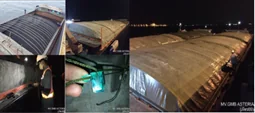
|
Marine logistics |
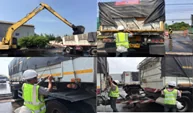
In-land logistics |
|
Requiring control of impacts from the transportation process in every process of the Company by covering loads with tarpaulins to reduce the impact of dust from goods and raw materials, in order to reduce dust impacts from the related transportation process |
Controlling all types of trucks transporting goods and raw materials, requiring that they be covered with tarpaulins to reduce the impact of dust from goods and raw materials, in order to reduce dust impacts from the related transportation process |
|
|
|
Product Characteristics and Production Process
1) Lime Products: Calcium Oxide, Calcium Hydroxide (Hydrated Lime)


Calcium Hydroxide (Hydrated Lime) Production Process

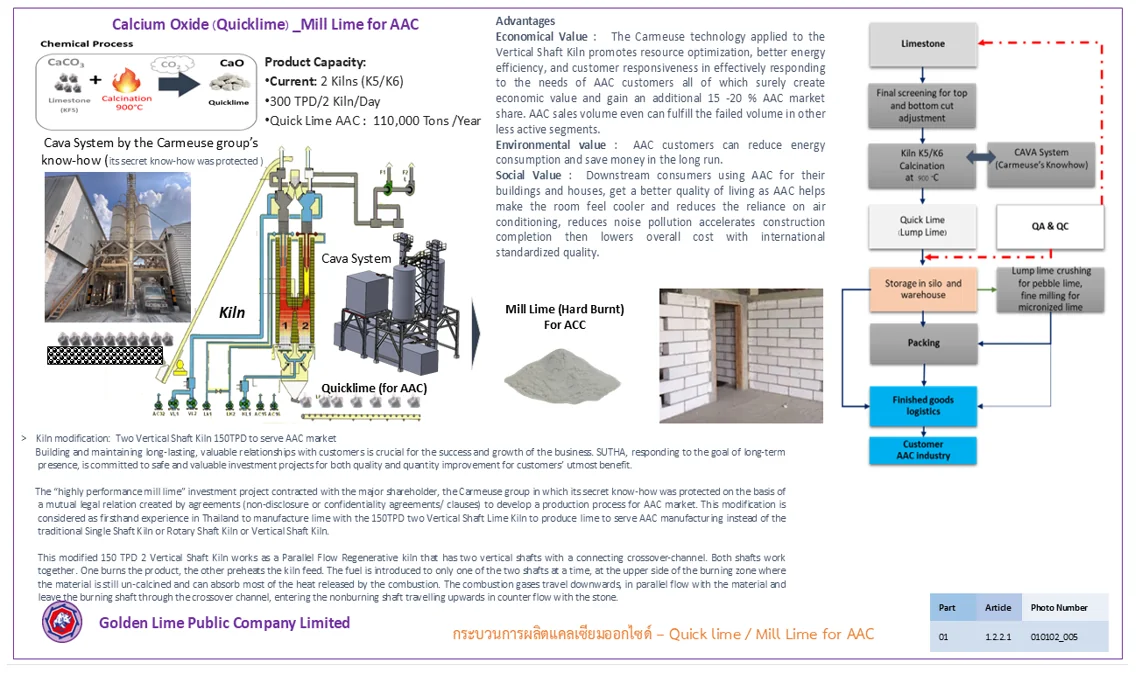
2) Ground Calcium Oxide for Autoclaved Aerated Concrete (AAC) (Calcium Oxide, CaO) or "Mill Lime (Hard burnt)"
Mill Lime (Hard burnt) is a product under the Company's business development and new product development project, carried out through an investment project. The highly performance mill lime project is one of the projects for adopting production technology, in which the Company entered into a contract for the procurement of machinery and equipment from the Carmeuse group, an indirect shareholder, through entering into a confidentiality agreement covering know-how and proprietary rights. The highly performance mill lime project enables the production process to manufacture products with enhanced properties for use by AAC brick manufacturing customers who require products with specific properties, as each customer may require particular specifications in terms of size or differing chemical reaction properties. As such, the product development department and related divisions have a process to develop formulas for use, and the production and various support departments must also plan production, manufacture and control, select products, and screen product properties for delivery to each customer in accordance with the required specifications.
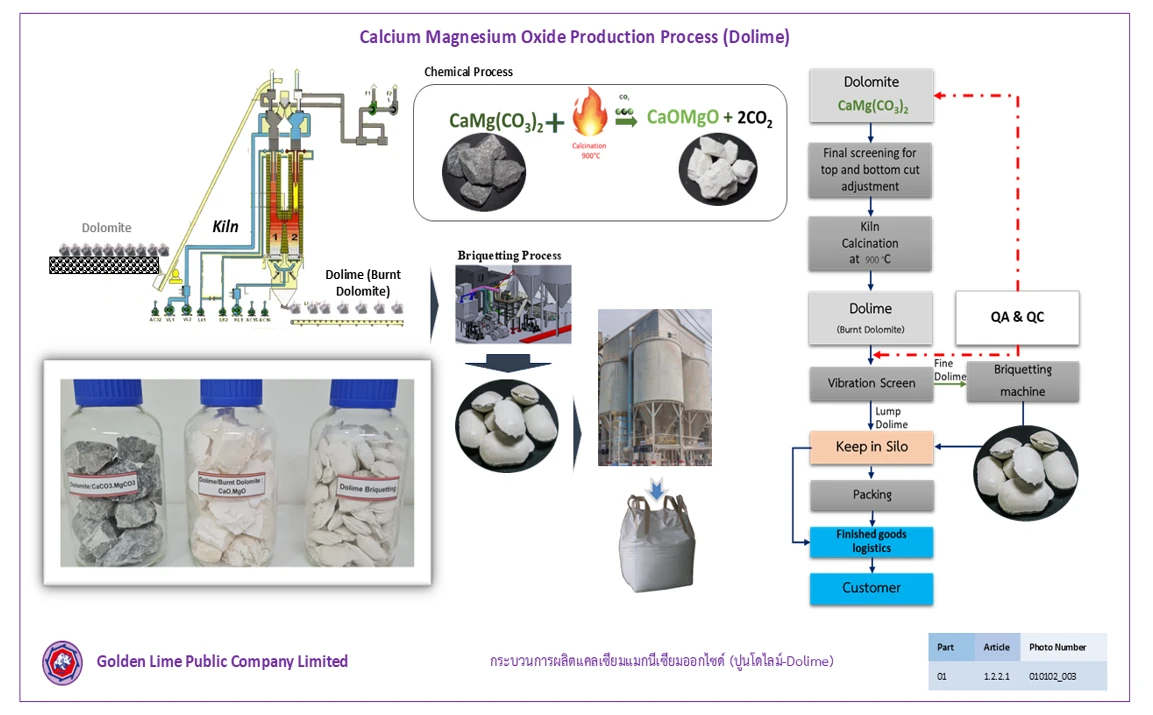
3) Calcium Magnesium Oxide (Dolime)

Calcium Magnesium Oxide (Dolime) Production Process
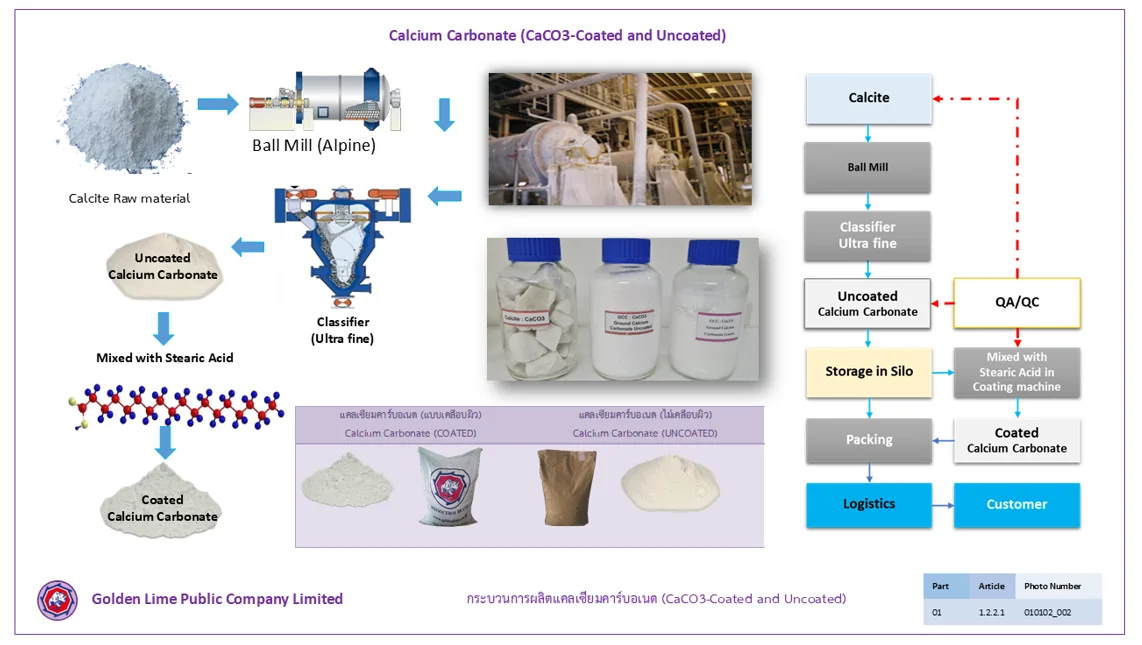
4) Calcium Carbonate (Calcium Carbonate, CaCO3)

Calcium Carbonate (Calcium Carbonate, CaCO3) Production Process
5) Marble Products, By-Products from Marble Production, Handicraft and Installation Services
(See product detail at website : http://thaimarble.co.th)
Prefabricated marbles
Prefabricated marbles are the products derived from the marble quarry operation of TMC or imported from aboard that has been customized until achieving either standardized or desired size categorized as follows;
· Local Marble
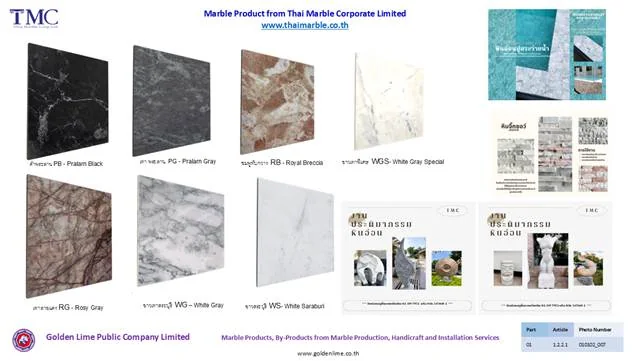
TMC's domestic marble slab business is selling marble slabs with a wide range of patterns, such as grey, grey-red, black and travertine. Most of the marble slabs are made from cutting marble blocks from the quarries in mining lease certificate that TMC was granted in order to produce marble bars. The white-gray marble red-stripes pattern is the result of Concession Certificate No. 32499/15852 (Khao Ngob), black marble is the result of Concession Certificate No. 32517/16065 (Khao Kao), and pink marble is the result of Concession Certificate No. 24869/14158 (Khao Thap Kwang). In addition, TMC procured other marble blocks for processing into slabs. The main distribution channels for TMC's domestic marble are from sales offices in Bangkok and Saraburi, as well as the sale of marble slabs to the project and the contractor of TMC, with details and product samples in the following table
· Import marble
TMC's international marble sales business is selling a wide range of marble slabs, such as white carara, creammafel, emperado, etc. The white tones are ordered from Italy and Greece with the grey and beige tones are ordered from Turkey and Spain. Black granite ones are ordered from China and India, with details and product samples shown in the following table

· Projects
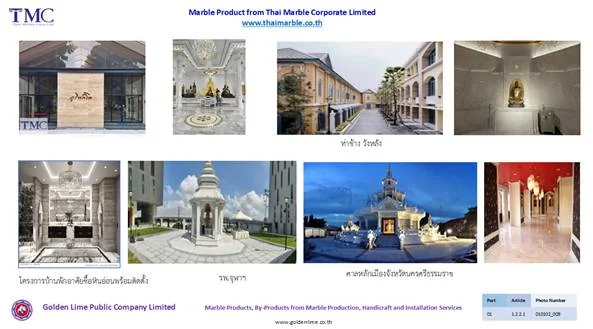
The project business includes installation services and project services that use marble and decorative stone products. TMC offers design, provides consultation, drawings, and installation of marble from experienced and specialized experts in both marble slabs and marble handicrafts as well as after sales service and recommendations for inquiry such as buildings, houses, government buildings Including well-known temples such as Makut Kasattriyaram Temple, Ratchaworawihan Wat Thep Sirin Thrawat, and Ban Pun Temple, etc. The source of the projects is mainly from the bidding, in which TMC has planned, designed and presented the marble-based projects in both the government agencies and private sectors, with examples of the projects shown in the table below.
· Other stones , Handicraft
Revenue from other stone sales including stone flakes, river stones, marble, stone wings, glass fragments, fragments and handicraft stones etc.
Marble handicraft products is a product of marble blocks by using a craft process or a hydro jet stone cutter into a craft piece of furniture used to decorate offices and building in various forms. Furthermore, the company also supports government policies for the production of OTOP products in Saraburi, such as dining table sets, reception sets, altar tables, vases, clocks, and name tags for placing on the table, carving work, etc. The main distribution channels for handicrafts come from the sales of various projects and contractors then TMC procuring marble raw materials and bringing the local craftsmen to lathe and carve in order to promote careers and create income for the local community.

6) Trading products
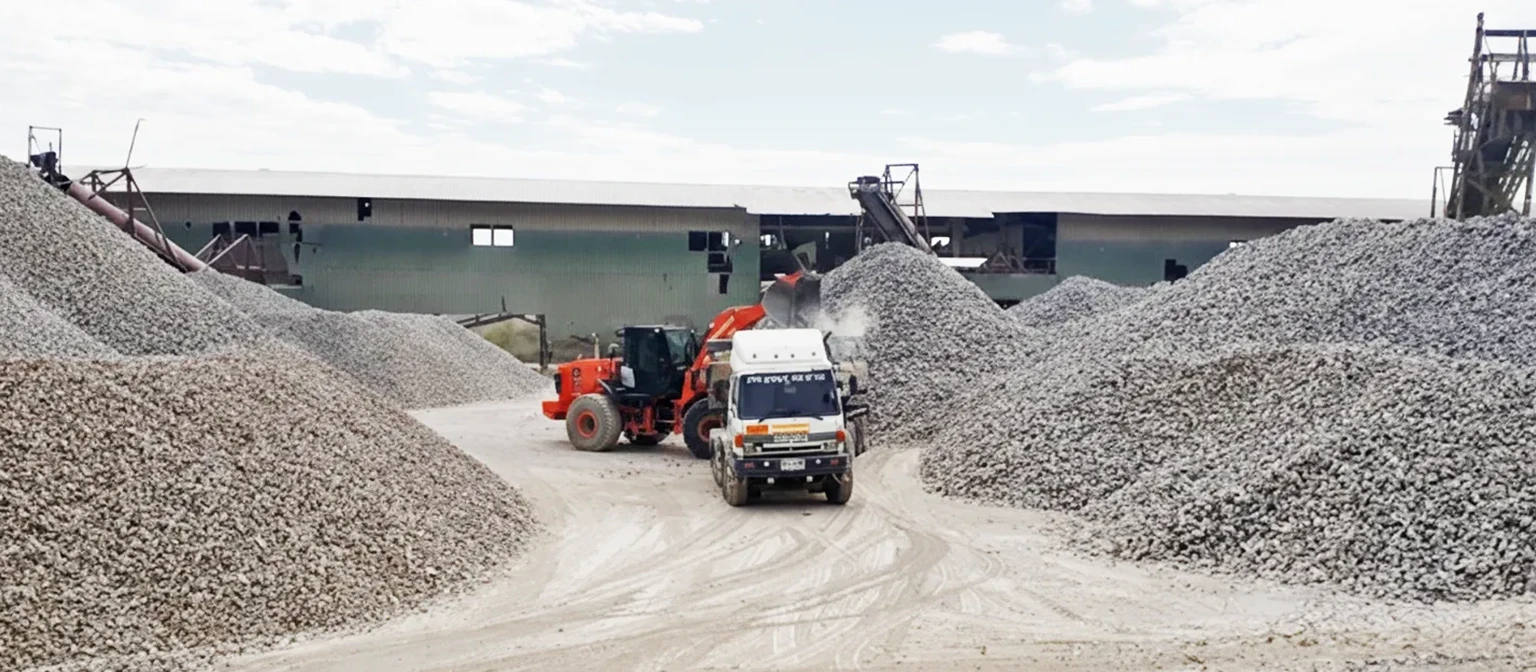
The Company has imported some products for both domestic and foreign trading. The trading products consists of the main products such as lime and Calcium Carbonate, other products and petcoke trading (same as the Company uses) to domestic customers including trading to the subsidiary in case customer's demand is greater than its production capacity. Products and by-products from the lime quarry production that are distributed by TMC are as follows:
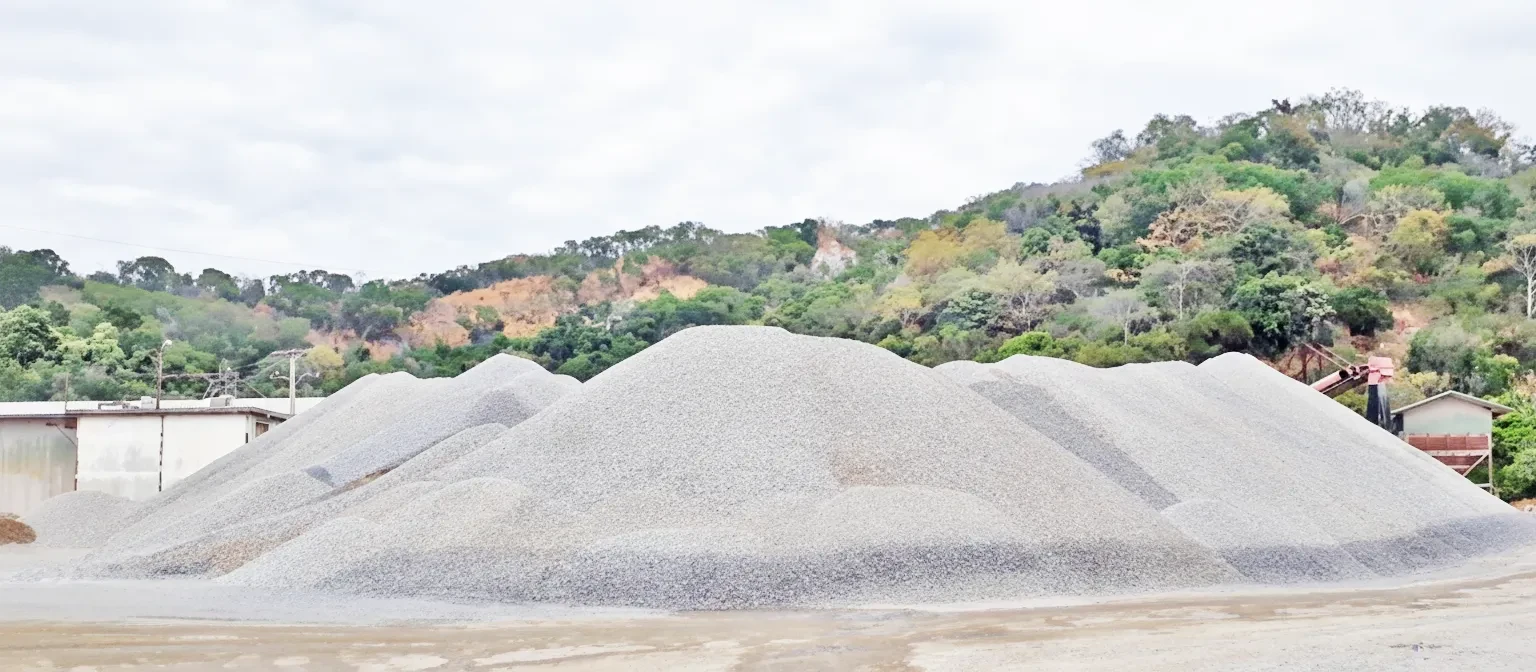

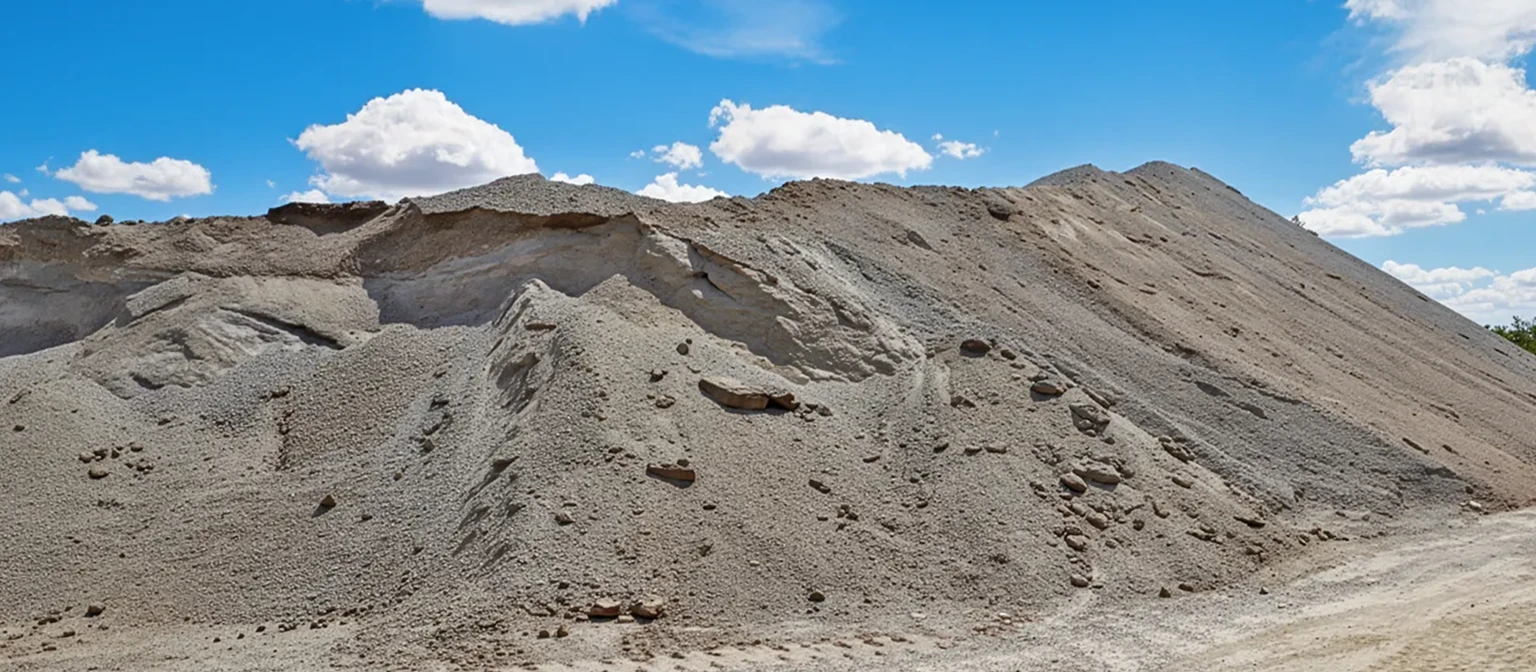
7) Sales and installation of machinery and equipment
The Sales and installation of machinery and equipment related to the lime production consist of EOD kiln installation, lime and limestone conveyor mechanism and fuel-burning system, including consultancy service on procurement, installation and maintenance of machines and equipment for lime production.
The Company has set up a subsidiary company named Golden Lime Engineering Company Limited ("GLE") with a registered capital of 20,000,000 baht, in which the Company holds 99.99% of the shares to engage in engineering business, designing, manufacturing and distributing machinery, equipment, spare parts including installing machinery and equipment for new projects in the future.