


Sustainability Menu

Economy
Environment
Social
Sustainability Menu
Economy
Environment
Social
Sustainability
Sustainability
Business and social innovation
Innovation and Technology
Innovation is a process of creating and implementing new ideas, concepts, products, or services that result in a significant improvement or advancement in offering goods or services.
Business innovation aimed at benefiting society and the environment is a key component of sustainability development policy and strategies. These innovations yield economic advantages for businesses while also generating value for society and the environment. The following guidelines outline this approach.
Focus on developing business, social, and environmental innovations that enhance value for the company and its stakeholders.
Contribute to societal and environmental value creation that can be measured through the innovations implemented, reflecting both business and social/environmental benefits.
Share the business and social/environmental innovations created, enabling external stakeholders to understand and implement them.
The Company aims to lead in the production and distribution of lime and calcium carbonate by prioritizing advancement of production technology and innovation, knowledge management, and the creation of new products to foster opportunities for itself and its partners, all while adhering to principles of good governance and sustainability development for society, the environment, and stakeholders.
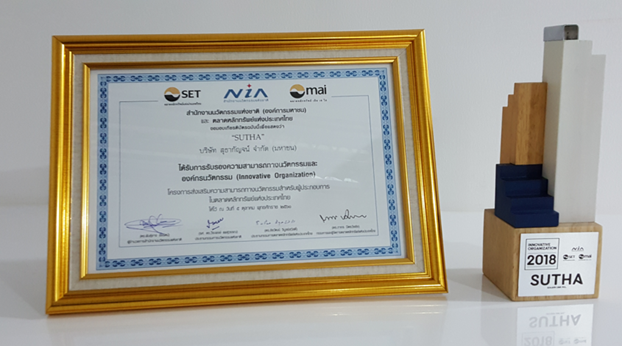
Since launching the EOD Lime Kiln Brand in 2018, the Company has received awards recognizing its innovative capabilities and commitment to innovation. This includes the engineering design sector operated by its subsidiary, Golden Lime Engineering Co., Ltd. In 2024, to enhance investment project models and improve production efficiency, the Company has reallocated personnel from Golden Lime Engineering Co., Ltd and established a dedicated engineering and investment project unit to further explore and develop technology and innovation for sustainable production processes.
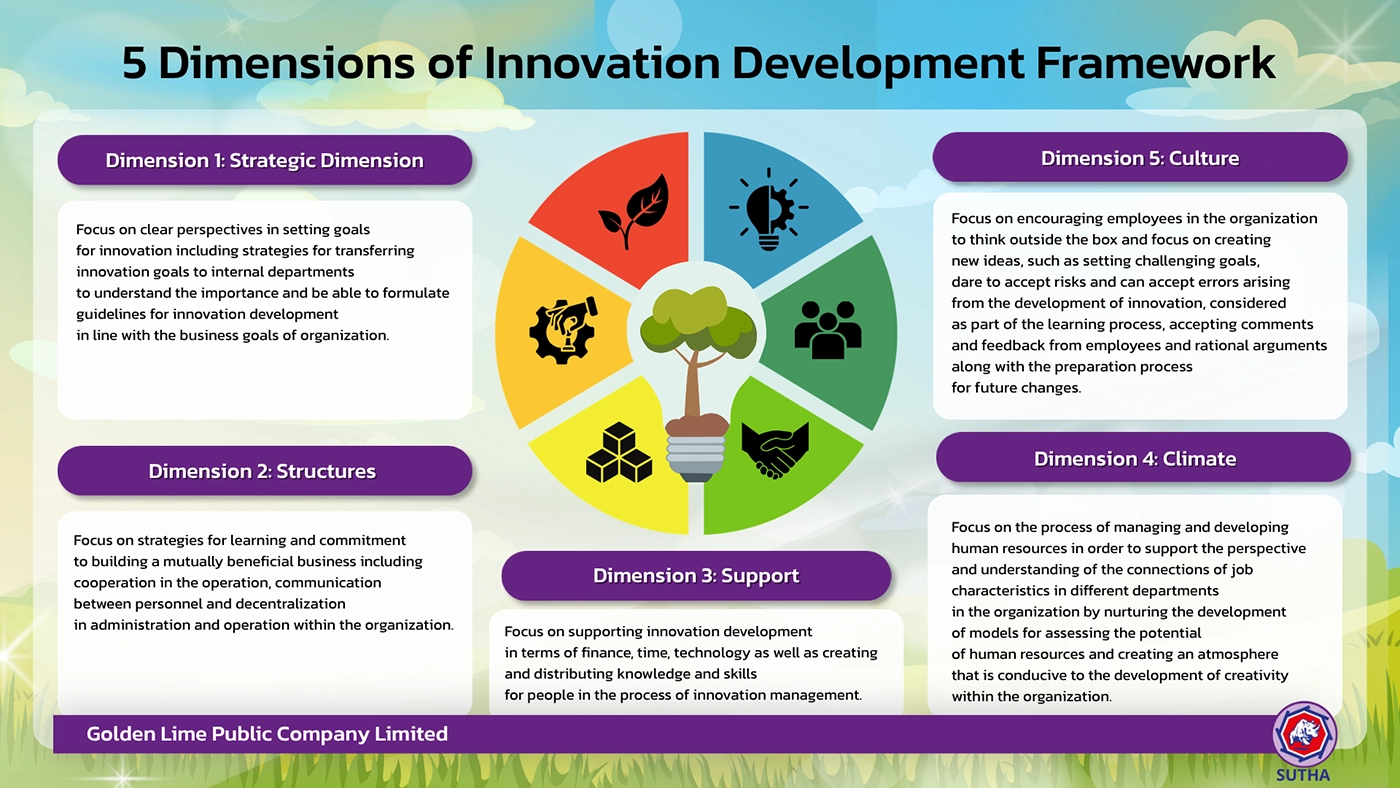
Establishing a framework to promote business and organizational development aims to transform them into sustainable innovation drivers through five key dimensions.
Innovation and Sustainable
In pursuit of establishing a diverse customer base and enhancing customer satisfaction, the SUTHA is committed to expanding opportunities and fostering business growth, all while taking into account the economic, social, and environmental implications, as well as the interests of stakeholders.
Key strategies SUTHA prioritizes the promotion of innovation and the broadening of its existing manufacturing capabilities to offer a diverse range of products that minimize environmental impact. It is dedicated to ensuring sustainable consumption patterns through asset acquisition and product development, while also addressing long-term customer needs and creating competitive advantages in the market through various business approaches and initiatives.
1. Business development
involves evaluating market opportunities and creating products based on the initial production process or exploring investments in new projects to reach untapped markets, including new customers, businesses, or industries that have not previously utilized the company's offerings. Key projects that have been initiated include:
- Substitute product for the steel sector : the development of dolime products.
- Lime product for the lightweight brick sector AAC grade lime products.
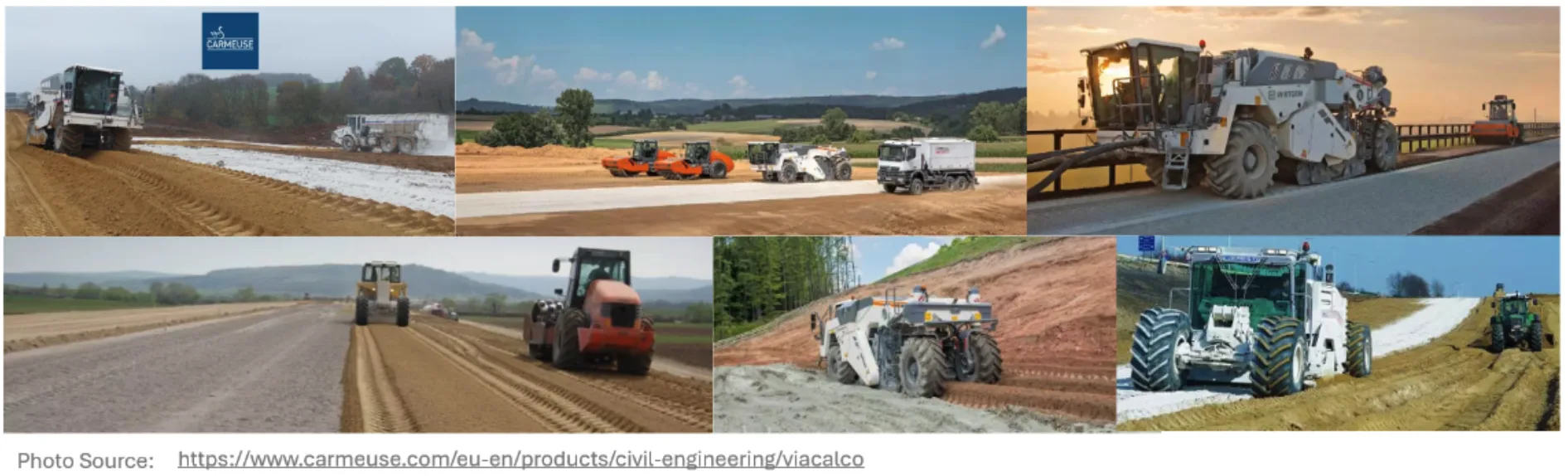
- Soil Stabilizer enhancing soil strength for business development. Currently, it is in the exploratory phase, assessing opportunities, potential business channels, collaborative efforts, product formulation, and properties, which will require medium to long-term development.
2. Product development
emphasizes leveraging technology and innovation to enhance the efficiency of existing production processes or investing in new projects. This involves applying knowledge and expertise in engineering, design, and capital allocation to create new products that meet specific targets. The newly developed and distributed products include:
- Dolime
- Milled lime (Hard Burnt) for the lightweight brick sector or AAC
Executing these initiatives will enable SUTHA to broaden its customer base, enhance customer satisfaction, and foster sustainable business growth opportunities.
Innovation for Products or Services
Business Development Goals
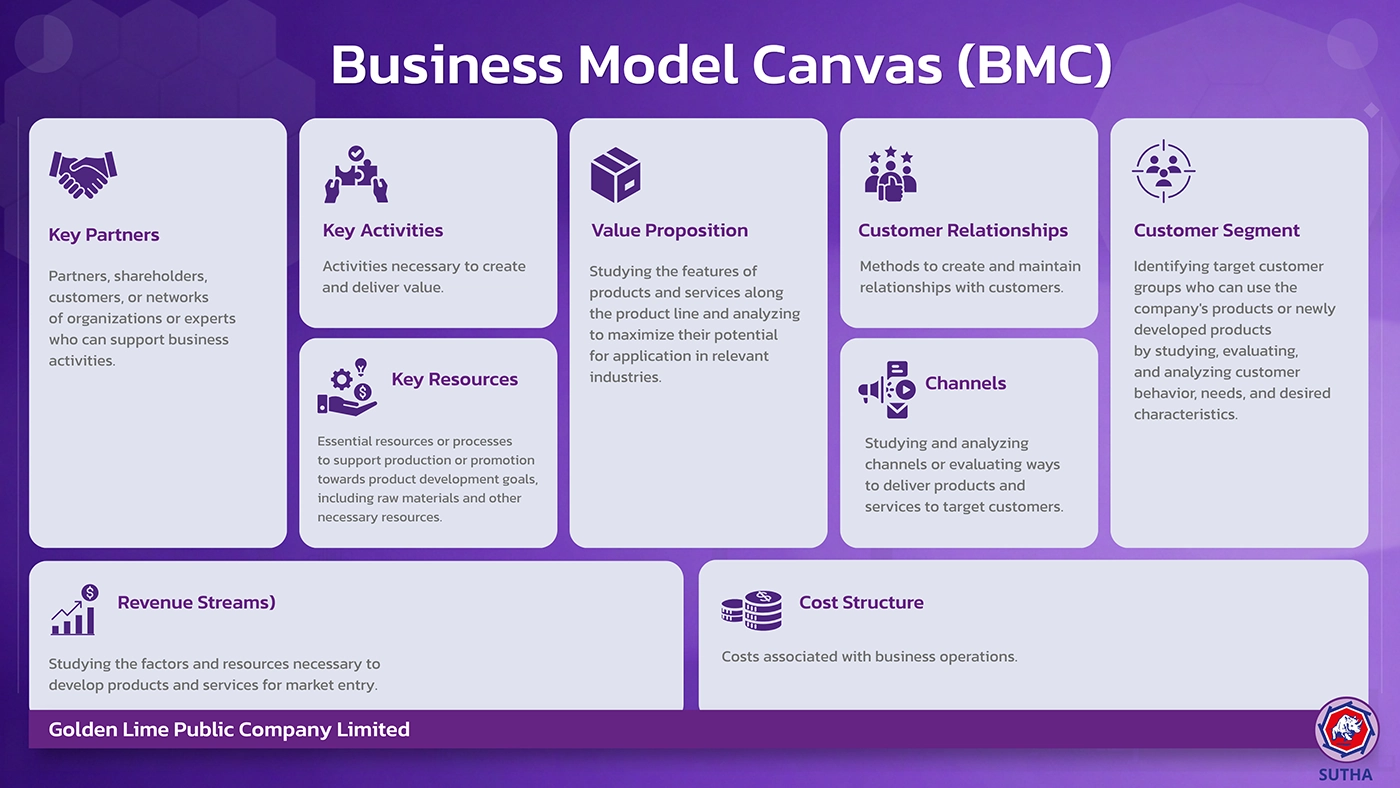
The company has set business and product development as one of its strategic growth goals. This includes projects to study the feasibility of business and product development, and innovation in processes. The key components of the model are as follows:
Innovation for Products or Services
Innovation involves applying new ideas or processes to improve products, services, raw materials, and processes. The key components are:
1. Creativity
Generating new ideas that can be practically applied.
2. Research and Development (R&D)
Conducting research and development to create new products or services.
3. Market and Customer Insights
Understanding customer needs and behaviors.
4. Collaboration and Cross-functional Teams
Working together across different departments and possibly with specialized external experts.
5. Risk-Taking and Adaptability
Accepting risks and adapting to situations, with each development project requiring study and analysis to assess potential risks and plan measures to manage impacts.
6. Technology and Digital Transformation
Using new technologies to create innovations or applying technology to drive development and progress in business activities.
Key Research and Development Projects
SUTHA is committed to driving balanced business operations that create shared value for the Company and its stakeholders across economic, social, and environmental dimensions. One of the Company’s key initiatives is the development and implementation of lime-based soil improvement solutions under the “Soil Stabilization” project.
The Company recognizes that soil conditions significantly affect national infrastructure. Research and related studies indicate that soil in many areas of Thailand has limitations in engineering properties, which may impact the stability, durability, and service life of infrastructure. As a result, the application of innovative soil improvement technologies presents both a critical necessity and a sustainable development opportunity.
- Low Stability of Clayey Soils Clay soils typically exhibit low bearing capacity, insufficient to support infrastructure loads, necessitating soil improvement or modification prior to construction. Such soils are commonly found in central Thailand and parts of southern Thailand. Due to high rainfall and elevated groundwater levels in certain areas, clay soils in Thailand tend to have high moisture content. Without proper treatment, excessive soil settlement beyond allowable limits may occur, adversely affecting structural stability, service life, and potentially causing damage to structures above ground level.
- Saline Soils Saline soils, or soils with high chloride or sulfate content, are commonly found in northeastern Thailand and coastal areas. These conditions directly impact structural integrity and are often evidenced by corrosion or rust in buildings and infrastructure. Mitigation typically involves the use of construction materials resistant to chloride or sulfate attack, or soil improvement prior to construction to enhance soil stability and reduce long-term structural risks.
- Shortage of Construction Materials In the near future, Thailand is expected to face increasing shortages of construction materials. Some areas are already experiencing limited availability of new materials that meet engineering standards, resulting in supply constraints. This situation requires adjustments in construction methods, as well as revisions to technical specifications and standards to better align with prevailing resource and environmental conditions.
Benefits of the Soil Stabilization Project
SUTHA evaluates that the development of soil stabilization solutions for infrastructure projects—utilizing lime and hybrid lime as core materials—provides benefits across multiple dimensions, including engineering, economic, environmental, and safety aspects:
- Enhanced Engineering Performance of Soils Improves soil stability and bearing capacity prior to construction, supporting the structural integrity of infrastructure projects.
- Cost Reduction in Natural Material Procurement Enables the use of in-situ or existing materials within project areas that may not initially meet specifications, by improving them with lime or hybrid lime, thereby reducing dependence on newly sourced natural materials.
- Reduction of Greenhouse Gas Emissions Lower transportation requirements for external construction materials contribute to reduced greenhouse gas emissions and a smaller carbon footprint.
- Improved Construction Safety Reduced transportation and material handling activities lower accident risks and enhance overall safety within construction sites.
- Enhanced Durability and Sustainability of Infrastructure Infrastructure built on soil stabilized with lime or hybrid lime demonstrates longer service life and increased resilience under environmental conditions.
Related Research
A review of past and current studies indicates that research on lime-based or hybrid lime soil stabilization in Thailand remains limited. To advance knowledge and innovation in this area, SUTHA has entered into a collaboration agreement with faculty members from the Department of Civil Engineering at Rajamangala University of Technology Isan. This partnership focuses on product development and the application of lime and hybrid lime in soil stabilization, with research findings currently in the final reporting stage.
| Years | Baths | Details |
|---|---|---|
| 2565/2022 | 432,964 | Investment in assets and equipment, operational expenses for process customization of the biomass project at Huai Pa Wai plant in Y2022-2024 |
| 2566/2023 | 722,624 | Investment in assets and equipment, operational expenses for process customization of the biomass project at Huai Pa Wai plant in Y2022-2024 |
| 2567/2024 | 59,810 | Investment in assets and equipment, operational expenses for process customization of the biomass project at Huai Pa Wai plant in Y2022-2024 |
| 2568/2025 | 339,000 | The expense relates to research and development on using lime as a stabilizing additive to improve soil strength in various infrastructure foundation layers. The purpose of the study is to enhance soil properties prior to construction so that they meet the standards required for infrastructure projects in Thailand. The work is being carried out in collaboration with the Civil Engineering Department of Rajamangala University of Technology Isan. The total R&D cost is 565,000 THB, to be paid for in three installments. In 2025, the first installment of 339,000 THB was already paid. The remaining payments are 169,500 THB for the second installment and 56,500 THB for the final installment. |